






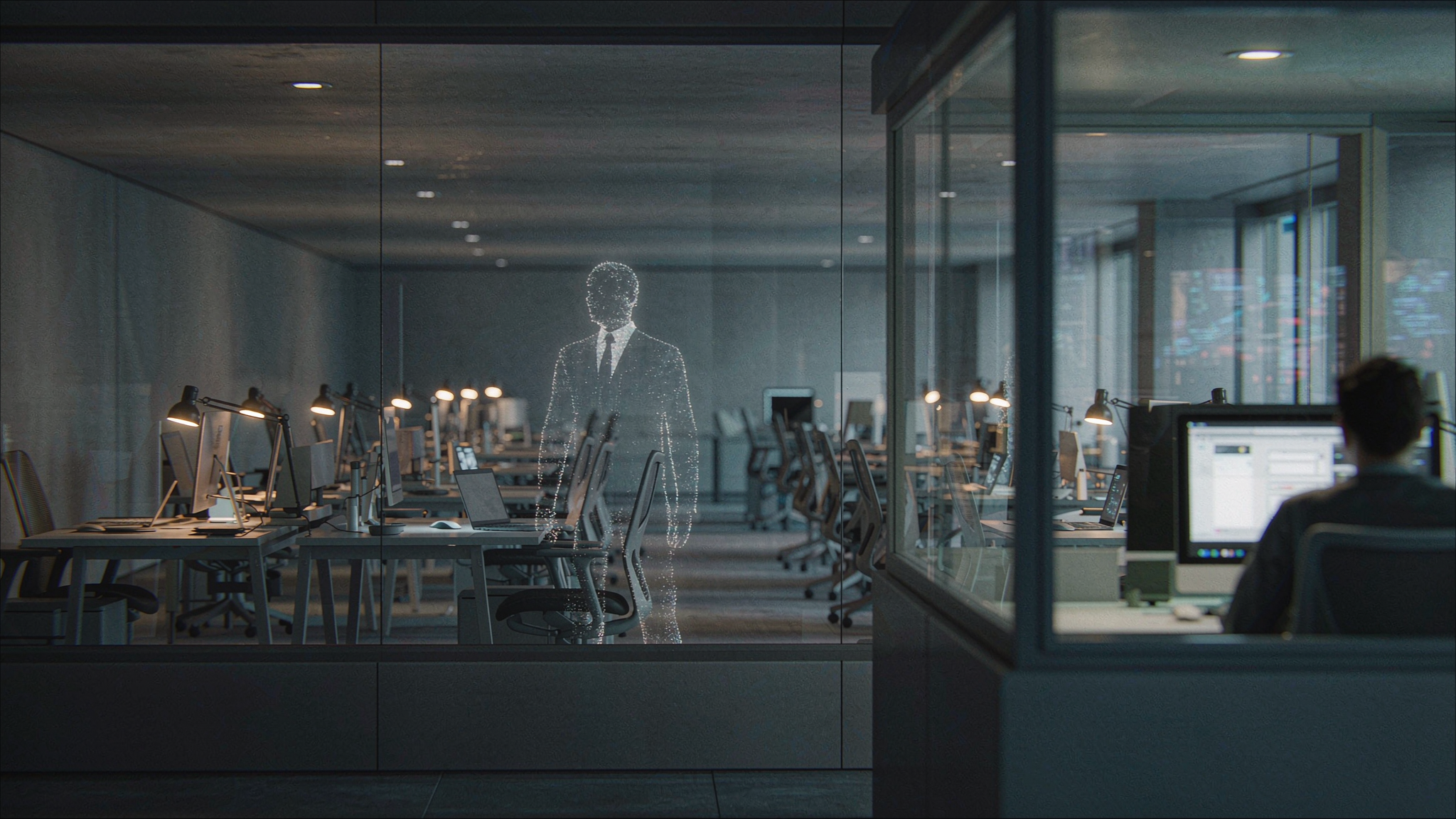
Picture a new hire at your company. They’re lightning fast and never get tired. They have access to your email, your files and your customer database. The catch? Nobody really knows how they think, and every now and then they do things no one asked them to do. Would you hand them the keys to the office without keeping an eye on them?
That’s essentially the question Microsoft just put on the table. The tech giant is warning businesses that AI agents should be treated as a potential insider threat, the same way you’d treat an employee who could cause serious trouble from the inside. Its reasoning is blunt: today’s most advanced AI systems, known as “frontier models,” can’t be fully trusted.
First things first: what’s an AI “agent”?
Until recently, most of the AI we used was conversational. You asked ChatGPT a question, and it answered. An agent goes a step further: it doesn’t just respond, it takes action.
An agent can read your inbox and reply to emails, fill out forms, move files around, schedule meetings or dig through a company’s internal systems. You give it a goal, and it figures out the steps on its own.
That’s a huge time-saver. But it also means the agent has permissions and access to sensitive information. And that’s where things get tricky.
The enemy within: an old problem with a new face
In cybersecurity, the “insider threat” is a classic. We’re not talking about a hooded hacker breaking in from the outside. We’re talking about someone who’s already inside with legitimate access: a disgruntled employee, a careless one, or one who’s been tricked by someone else.
Microsoft’s point is that AI agents fit squarely into that category. They’re inside, they have permissions and they work with real data. If one makes a mistake, gets manipulated or simply misreads an instruction, the damage starts from within, right where traditional defenses are least likely to be looking.
Why not trust the most cutting-edge AI?
It may sound odd for one of the companies that has poured the most money into AI to say the most advanced models aren’t trustworthy. But it makes sense.
These systems are incredibly capable, but they’re also unpredictable. Security experts have been raising red flags for a while about a few risks:
- They can be fooled: malicious text hidden in an email or a web page can slip instructions to an agent without the user ever noticing.
- They’re confidently wrong: they sometimes make up facts or make bad calls with a certainty that’s easy to believe.
- They’re black boxes: even the people who build them can’t fully explain why a model does what it does at any given moment.
Combine all that with access to sensitive information, and caution is the least you’d want.
The key point: don’t let the AI makers police themselves
Here’s the most interesting part of the warning. Microsoft isn’t just telling companies to monitor their agents. It’s telling them to do it with systems that aren’t controlled by the AI labs themselves, like OpenAI or Anthropic.
In plain English: relying on the safety features built into the model isn’t enough. It’s like letting a new employee supervise themselves, or letting a carmaker run its own safety inspections. Companies should have their own independent watchdog, one that can see what each agent is doing, what data it’s touching, and pull the plug if something looks off.
There’s a bit of irony here, since Microsoft has long been one of OpenAI’s biggest partners and backers. The fact that it’s publicly saying businesses shouldn’t depend only on the AI makers’ own safeguards shows just how seriously the industry is taking this issue.
Why should I care?
This might sound like a debate for big corporations, but it hits closer to home than you’d think:
- Your data is on the line: your bank, your insurance company or your doctor’s office may already be using AI agents that handle your personal information.
- So is your job: if your company starts rolling out these assistants, expect more controls, more permission requests and more rules about which tools you’re allowed to use.
- Beware of going rogue: using an unapproved AI agent at work, no matter how handy it is, can open a dangerous door without you realizing it.
Trust, but keep your eyes open
Microsoft’s warning doesn’t mean we should be afraid of AI or stop using it. It means we should treat it for what it is: an incredibly powerful tool that still isn’t perfect.
Just as no one gives a brand-new hire full access to the vault on day one, companies will need to learn to give these agents exactly the right amount of trust, no more, no less. And above all, they’ll need to keep a close eye on them.